
Online voice lessons…
is it possible?
8 essential elements you need to know
“Is it possible to take online singing lessons via video conference? Many wonder whether the teacher’s evaluation might be compromised. This doubt arises because internet connection and audio devices can alter the original signal.”
Many aspiring singers wonder if online voice lessons are truly effective. To properly answer this question, we must start from two assumptions and two key considerations.
Assuming that:
-
The quality of the internet connection between student and teacher is satisfactory. -
The teacher has professional equipment at their disposal, adequate to optimally receive the incoming audio signal.
Considering the limitations:
-
The amateur/semi-professional quality of the equipment used by the student to transmit the audio signal. -
The process of compression/alteration of the signal by the video calling platform.
The teacher should nevertheless be able to perceive and evaluate the following fundamental elements:
The degree of freedom of the laryngeal musculature
Can they perceive any muscular tension or constriction at the laryngeal level?
The degree of vocal fold adduction
Can they perceive if the vocal folds close adequately or if there is excessive air in the sound?
The degree of vocal fold thickness
Can they perceive whether the vibrating vocal fold mass is appropriate for the produced pitch or if it is excessive/insufficient?
The degree of laryngeal movement
Can they perceive if the larynx rises or lowers excessively during phonation?
The degree of resonance
Can they perceive if the sound is balanced across the different resonating cavities (pharynx, mouth, nasal cavities)?
The degree of register consistency
Can they perceive any ‘breaks’ or abrupt transitions between the different vocal registers?
The degree of subglottic pressure consistency
Can they perceive any differences in volume during emission?
The degree of extrinsic muscle involvement
Can they, relying on acoustic and visual data, recognize the quality of a sound that exhibits interfering tensions at the extra-laryngeal muscle level?
In light of these points, we can draw an important conclusion. It is true that technological limitations reduce the aesthetic quality of the sound. However, the eight elements listed above allow for a clear understanding of the student’s vocal function. The teacher receives more than enough data to evaluate the freedom and efficiency of the voice.
Consequently, if the teacher knows how to recognize these elements, teaching online voice lessons is absolutely possible and effective.
However, a clarification is necessary. Recognizing these elements makes remote teaching possible, but does not automatically guarantee its effectiveness.
Success depends entirely on the teacher’s skills. To teach online, a great diagnostic ear is not enough. The ability to prescribe targeted corrective exercises based on logical and scientific criteria is also required.
Furthermore, if the teacher’s method requires physical contact with the student, the technological limitation will be evident. If, on the other hand, the method does not involve physical contact, the only real limit will be the teacher’s expertise in creating the right vocal exercises.
Designing vocal exercises in online voice lessons
Finally, it is important to consider how vocal exercises are constructed. They are based on a combination of:
-
Vowels
-
Consonants
-
Dynamics
-
Scales with specific pitches and modulations
These tools guide the student’s muscular coordination toward the desired outcome. All of this happens in a functional and indirect manner, without any need for physical contact.
Over a decade of experience in online voice lessons
The points presented above are the result of an online teaching experience spanning over a decade and thousands of hours of training singers and voice teachers.
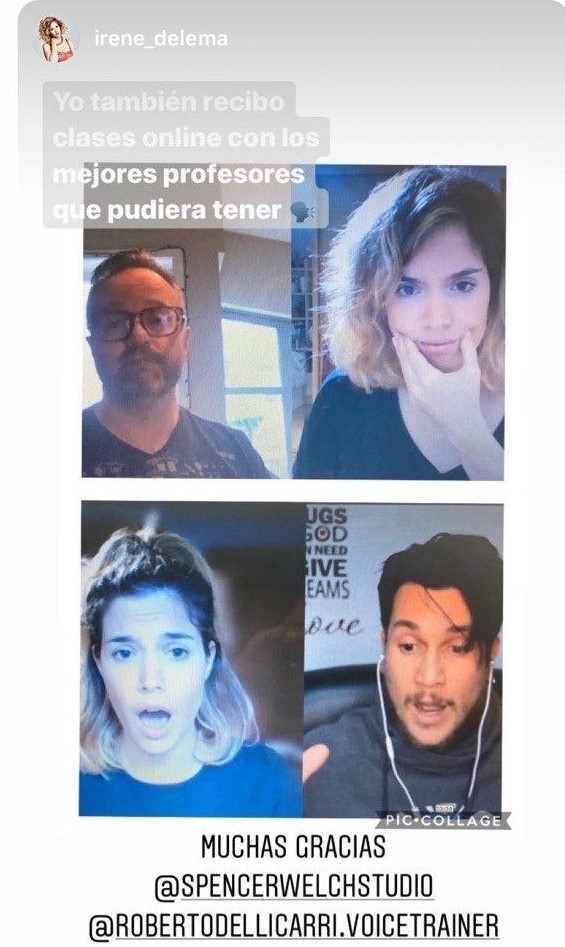
I was one of the first teachers in Italy to adopt this learning and teaching format. My mentors, Seth Riggs and his Master Teacher associates, were pioneers of distance learning as early as the 1990s, and since then, people around the world continue to reap immense benefits from remote lessons.
Since 2019, I have had the privilege of training and certifying hundreds of teachers for the Institute for Vocal Advancement (IVA) worldwide. We work both in person and online. We teach them to interpret acoustic and visual data functionally, helping them recognize vocal balance, diagnose issues, and prescribe the most effective corrective exercises.
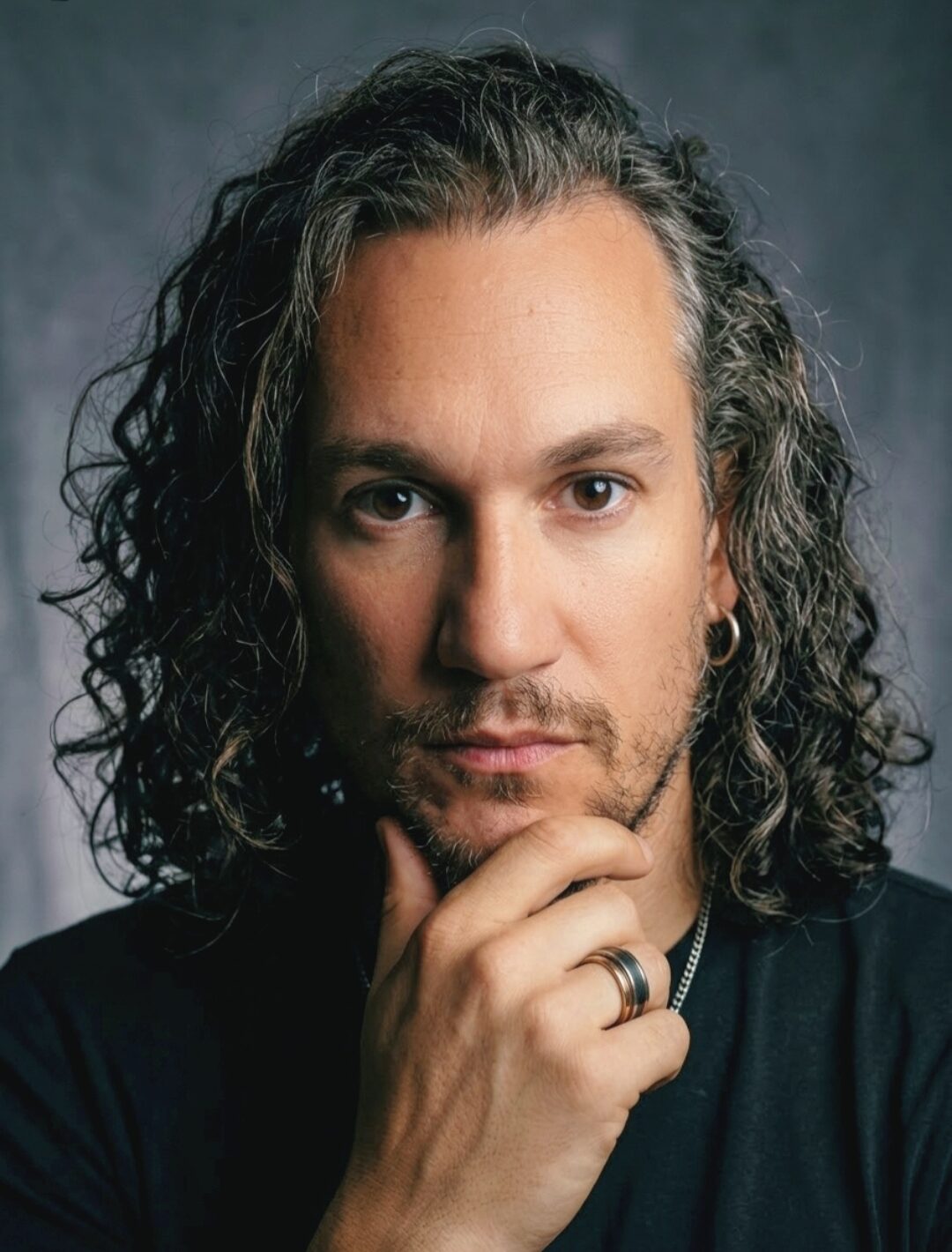
Roberto delli Carri
Voice Trainer, Master Teacher IVA
Author of the book “iMIX. Vocal technique according to the MIX methodology”
