MIX and MIXING in Singing:
Beyond the Concept of Mixed Voice
Vocal technique, physiology, and style: understanding what we truly mean when we talk about MIX.
By Roberto Delli Carri — IVA Master Teacher, vocal trainer, and author of the book iMIX.

It is a request I hear often, yet one that can conceal vastly different vocal needs.
Some singers want to reach high notes without having to push; others want to lighten their sound without losing body; some look for a fuller, more incisive tone, while others want to connect the different areas of their vocal range more smoothly. And there are also those who simply want more expressive options, without feeling trapped in a single way of singing.
Everyone talks about MIX, but are they necessarily looking for the same thing?
I believe part of the confusion stems precisely from this: we use a single word to describe distinct experiences, physical sensations, and vocal outcomes. Sometimes we speak of a sound, other times of a register, a coordination, or a specific way of phonating.
That is why I find it helpful to take a step back and clarify the perspective from which I approach the MIX.
There Is No Single MIX
I do not think of the MIX as an absolute, single, specific sound that every singer must learn to replicate.
I consider it a family of vocal qualities that can be developed, altered, and connected through technical training.
Some may be lighter, others fuller; some soft and delicate, others bright, intense, and cutting. They can differ in color, body, volume, and timbral characteristics.
This work can span across the various areas of vocal range and the entire dynamic spectrum, from pianissimo to fortissimo, exploring different vowels and diverse vocal tract configurations, including variations in larynx height.
Naturally, this does not mean every quality must be available across every note, volume, and vowel combination. Rather, it means we should never equate the MIX with just one acoustic configuration.
This is the first distinction I wish to introduce: I do not teach singers to find a predetermined MIX; I train them to expand the vocal qualities they are able to produce and control.
So Is the MIX a Third Register?
Here we enter an issue that deserves to be examined without oversimplification.
From a physiological standpoint, science primarily describes two vibratory mechanisms of the vocal folds, termed M1 and M2.
Generally speaking, M1 is characterized by a fuller engagement of the vibrating vocal fold mass, whereas M2 involves a thinner vibratory configuration.
In teaching terminology, we frequently encounter terms like chest voice and head voice, but these names do not necessarily map one-to-one onto M1 and M2. They can refer to subjective sensations, acoustic qualities, and vocal modes that must not be automatically conflated with physiological mechanisms.
And what about MIX?
My view is that it is unnecessary to regard it as a separate, autonomous third vibratory mechanism in order to recognize its practical reality and value in vocal pedagogy.
The fact that two main vibratory mechanisms are described does not mean that only two sonic qualities are possible.
The number of physiological mechanisms and the variety of sounds we can produce are two entirely separate matters.
A singer can produce vastly different vocal qualities without needing an entirely new anatomical mechanism for each one.
This is a crucial point: we must not confuse the way we describe the physiology of the vocal folds with the way we organize and teach the expressive possibilities of the voice.
Does the Sound We Hear Tell Us Everything That Is Happening?
Not necessarily.
When we listen to a voice, we perceive the combined result of multiple variables: the vibratory behavior of the vocal folds, air flow and subglottic pressure, the acoustic dimensions of the vocal tract, and intentional sound shaping by the singer.
We can hear shifts in dynamics, brightness, depth, and vowel timbre. Yet we cannot always determine, by ear alone, the exact physiological configuration that produced them.
A particularly revealing exercise for understanding this distinction is the classic messa di voce.
On a single sustained pitch, the singer starts pianissimo, swells gradually to fortissimo, and then returns smoothly to pianissimo.
Throughout the exercise, the timbre transforms visibly: it can become fuller, brighter, more intense, or shift colors.
Yet can we determine, by merely listening to the acoustic result, the exact millisecond any transition between M1 and M2 occurred?
Not necessarily.
Answering a physiological question requires reliable physiological data, not merely an auditory impression.
The messa di voce does not prove the existence of a third mechanism, nor does it prove that the mechanism stayed unchanged throughout the phrase. Instead, it highlights how gradual acoustic transformations can be, and how precarious it is to assign an anatomical label to every audible variation.
This is a distinction I consider essential for vocal educators: describing what we hear is not the same as explaining how it was produced.
Is a Technically Efficient Sound Always the Stylistically Best One?
Another question I consider vital concerns the relationship between vocal technique and musical style.
Imagine two singers.
The first seeks a soft, buoyant, and controlled delivery. The second wants an aggressive, edge-heavy, and biting sound to perform an authentic Hard Rock track.
Can we judge both using identical aesthetic criteria?
Certainly not.
Technique exists to empower the singer to master their instrument, cultivate control and flexibility, and achieve their artistic intentions under a reasonably sustainable vocal load.
However, that does not mean everyone should sing with the same type of sound.
A raspy, compressed, or heavily driven sound can be a potent stylistic choice. It is not automatically a technical error. At the same time, producing a compelling artistic sound does not guarantee that it is sustainable long-term or managed with optimal physical efficiency.
Even the concept of an “euphonic” sound must be contextualized: what feels pleasant or authentic in a particular musical culture is not necessarily what is mechanically most efficient.
For this reason, I distinguish between two core questions:
From a technical standpoint: How is the sound being produced? How controllable, repeatable, and sustainable is it relative to the singer’s goal?
From a stylistic standpoint: Is that sound authentic, emotionally resonant, and appropriate for the musical genre and narrative intent?
The answers can diverge, and both must be taken into account.
I do not want to force everyone into producing a neutral, homogenized sound. I want them to command an ever-expanding vocabulary of vocal options and to deliberately choose what best serves what they wish to communicate.
What Do I Mean by MIXING?
At this juncture, we can also clarify the exact meaning I ascribe to the word MIXING.
If MIX is a family of vocal qualities, MIXING is the ongoing process through which a singer learns to develop, modulate, connect, and adapt these possibilities.
It does not mean simply finding an elusive midpoint between chest and head voice.
It means coordinating the multiple components of vocal production: vocal fold resistance, breath pressure management, acoustic vowel tracking and vocal tract shaping, dynamic range control, and the elimination of redundant muscular tension.
Crucially, there is no one-size-fits-all formula.
When a singer asks me to work on their MIX, I never start with the exact same routine or exercise. First, I identify what they want to achieve and observe what actually happens when they sing.
Two individuals might make identical requests yet require entirely opposite solutions:
- A singer who strains on high notes will need to develop a lighter coordination and release excess weight.
- Another singer might already have an easy, breathy high register, but struggle to build vocal closure and acoustic core.
- A third singer may produce both timbres with ease, yet fail to connect them across musical phrases or adapt them to different genres.
The starting point is never a dogmatic sound, but careful observation of what the singer can currently execute.
From there, we test hypotheses, select tailored pedagogical tools, and verify the outcome.
It is an intentional, iterative process of development, not the search for a universal magic bullet.
In Conclusion: A Distinction That Changes How We Teach
I would summarize my pedagogical philosophy in two definitions:
MIX
MIX is not a single sound, nor a separate anatomical vocal mechanism.
It is a pedagogical concept that encompasses a family of vocal qualities singers can learn to develop, modify, connect, and adapt across diverse musical styles.
MIXING
By the term MIXING, I refer to the active process through which these vocal possibilities are cultivated, coordinated, and refined, aiming for effective, controllable, and sustainable singing over time.
I consider this distinction invaluable because it prevents confusing a pedagogical concept with an anatomical categorization, an acoustic timbre with its generating mechanism, or a stylistic choice with technical flawlessness.
To teach the MIX, we do not need a single monolithic definition that explains every acoustic and physiological nuance. We simply need to know what we are training, observe how the voice responds, and deploy the most effective pedagogical tools.
Ultimately, singers do not need to hunt down one single MIX.
They need to unlock more vocal possibilities, master their control, and know exactly when and why to use them.
Deepen the Work on Your Voice
If you want to cultivate greater freedom, control, and variety in your vocal capabilities, the first step is to accurately assess where you stand and what your instrument needs.
During an Initial Vocal Assessment, we evaluate your muscle habits, current skills, and artistic goals to design a clear, individualized study roadmap.
Discover Online Lessons and Book a Vocal Assessment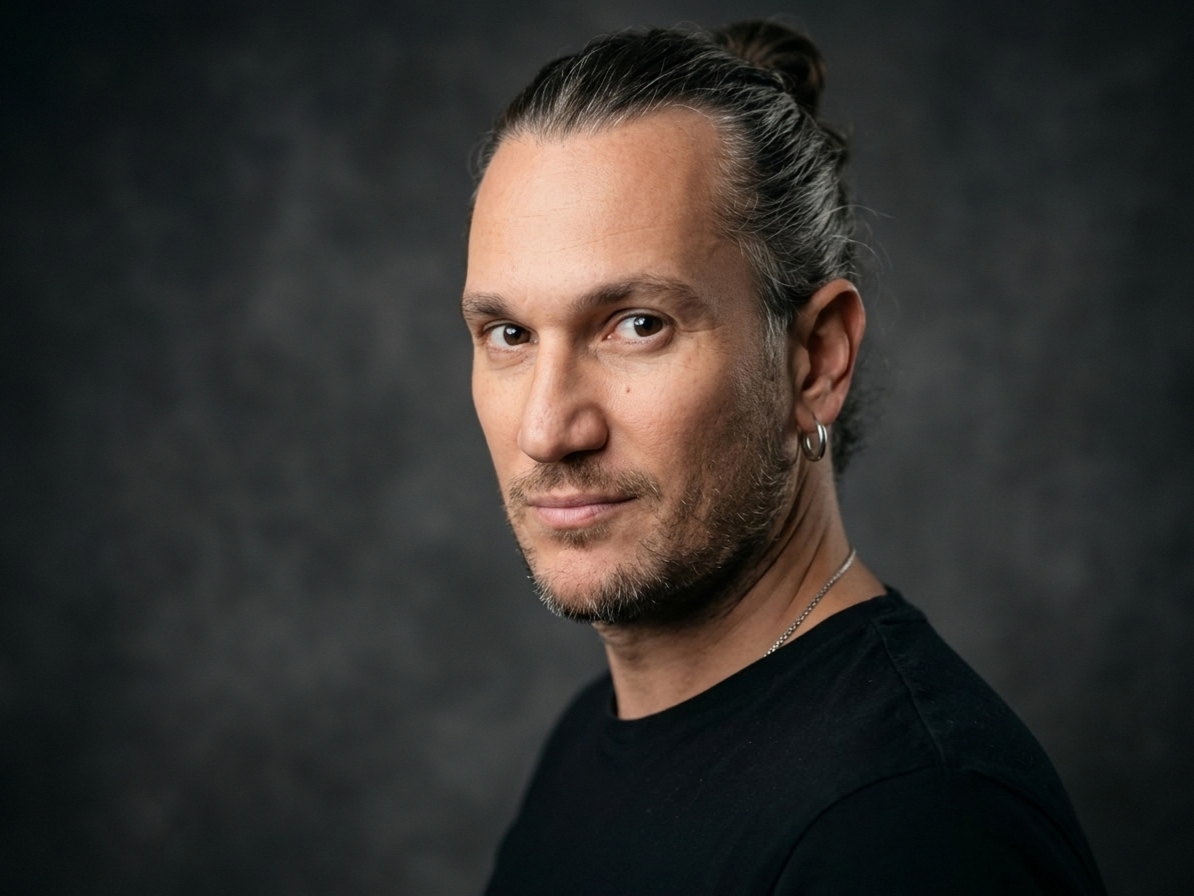
Roberto Delli Carri
Singer, Pianist & Vocal Trainer
IVA Master Teacher, international trainer of voice teachers, and author of iMIX – Vocal Technique According to the MIX Methodology.
Explore training on vocal technique and individual online lessons.
